Showing posts with label Homeschooling. Show all posts

Tuesday, May 17

A Network of Micro-Schools is The Future of Learning


This weekend I co-curated and hosted the first Innovation Ed Conference which brought together parents, educators, entrepreneurs and investors to explore where learning can and should be going.  


Here's the transcript of my talk from the conference on The Future of Learning:

"Eight years ago I co-founded for Bay Area families who are educating their kids independently, outside of school.  The group has grown to include a couple thousand people and based on their experience...it's clear that radically customized learning is extremely effective and produces self-directed and engaged learners.

Yet whenever I hear from [Innovative Schools] like [Khan Lab School and especially Brightworks] I'm envious of the resources accessible to them; consistent community, physical space and learning structures.

So, I want to talk about the possibility of merging the benefits of school with the freedom, agility and customization enjoyed by independent learners.  I want to talk about the growing trend-- what I believe will be a massive explosion-- in the availability of micro-schools and independent learning centers.


"A micro-school as I'm using the term today is a place where a small group of people gather to learn and create in highly customizable ways." 

Consider other recent entrepreneurial trends; The Co-Working Space has grown out of the need for adults to come together to network and share resources, where they otherwise might have had to choose between a 9-5 job and relative isolation as an artist, freelancer or entrepreneur.  Hackers Spaces allow people to share equipment and tools and to build things together.  Meet-up and General Assembly offer courses and gatherings for like-minded people to connect and learn together.  Amazing, effective and timely offerings!  And they're almost entirely geared towards ADULTS.

Why not apply these same principles to learning options for teens?

It's the perfect time. Research shows that the current generation of young people are used to individualization and customization and if given a choice they are not willing to stick around if they aren't receiving relevant personal benefit or growth.  And while the current trend of DIYL — (do-it-yourself learning) is strong and exciting, young people don't want to learn in isolation any more than adult freelancers want to work at home alone in their living rooms.

Add to that the fact that we live in time and place where there is simply not yet enough schools like the ones we've heard from today and independent learning spaces and micro-schools seem like an affordable, agile and customizable solution for young learners to come together, to build, to make, to collaborate, learn, study and to just be together.  And the beautiful thing is that there's no limit to how many can exist.  

All that's needed is an individual with a vision; It might be a teacher, or a parent, or an entrepreneur with the vision.  Guess what.  It could even be a student!  

Maybe you imagine something part-time, maybe you need a full-time program or maybe it's a series of specialty classes.  It could be in one location, at a home, a business or in a community center. Or maybe the micro-school of your dreams is a series of pop-up environments, or interactive experiences, or a roving field trip series.  The options are really unlimited.

But this is not a new idea; It's already happening.  Micro-learning environments exist in the form of parent-run learning co-ops for all ages, where a group of families come together, hire a teacher and design or commission the curriculum for their kids.  They exist when an enterprising teacher gathers small groups of students to learn together in one-room schoolhouses.  Educators are taking ownership of education and running small businesses offering modularized classes in various subjects at Quantum Camp and Share Path Academy (just to name a few) where kids and families can choose one a la carte class or sign up for a whole day or multiple days.  

Outschool has begun to aggregate the class offerings available for and by micro-schools, and Cottage Class is innovating around connecting spaces, teachers and families as well as exploring the possibility of accessing space in senior homes and libraries.

What's needed?  Simply more and better.  More collaboration; better connectivity. 

Imagine a network of micro-schools coming together to share the resources that are usually only available to larger organizations like sports and theater facilities or social events.  

Increasingly we need to find new ways to connect the people who are already creating micro-learning environments and to inspire more people to create new versions, with the sky as the limit.  Perhaps we can even collaborate and build relationships between micro-schools and some of larger schools represented here today.  

I think we're all in agreement that student-centered engagement-based learning is what is needed.  If we really want to see it happen the way it could, we're all needed.  We need parents who really understand the degree of individualization possible, educators who are ready to take advantage of the agility a small organization offers, entrepreneurs who see the opportunity and growing market in direct-to-consumer learning...and kids who have the courage to step up and insist that we let them join the party.

We didn't plan this conference to provide all the answers...mostly because we don't have them.  Rather we know that so many of you have solved pieces of the puzzle.  We want you to talk to each other, today and going forward.  Make connections, challenge assumptions, brainstorm possibility!"

Wednesday, March 9

Possible High School Learning Options

Fusion Academy
Structured Collaboration with other kids: no (?)
Unstructed social opportunities with other kids: yes
Customizable Learning and appropriate intellectual challenge: yes, mostly 1-1 and individualized
Location:
Cost:

Carlemont Public High School
Structured Collaboration with other kids: yes
Unstructed social opportunities with other kids: yes
Customizable Learning and appropriate intellectual challenge: somewhat (ie AP)
Cost: $0
Location:
Other:
Here's their sample educational plan
Looks like music is mostly chamber and orchestral but there is a jazz ensemble

Semester in Ghana

d.tech school
Public, could apply but would have to enter at grade 9.  Could work through high school in three years.
Recent email with more info on applying

Semester or Year-long school in France

1 week summer service trip in Guadeloupe

3-week service learning trip to India (with Tibetan culture)

Care and community service in Nepal (2 weeks post 16th bd)

2-week August service trip to French-speakin Senegal (supposed to be 16)
$2395

Wednesday, January 13

San Francisco Bay Area Independent Learning Options

This post came about like most others; when I'm asked about a topic a LOT, it's time to park the answer here.

Taking kids out of school to learn at home used to be called "Homeschooling" but for me, and a lot of the people I know, that's an unfortunate misnomer.  We didn't leave school to recreate it at home, and anyway we're not home all that much.  There's too much to do, see and learn out in the world, close to home and further afield.

In the last decade since we left the Brick and Mortar school system a lot has changed.  The local scene is barely recognizable.  There are learning opportunities for all ages and all interest using a huge variety of formats and delivery/connection vehicles.

Educator, museums, entrepreneurs and business owners have increasingly discovered that we're an actual market.  That's right!  Parent will spend money on their kids learning.  Some of us will do so even if it doesn't directly increase their chances of getting into Harvard.

So, here's a collection of just a few of the wonderful options for a la carte, independent or direct-to-consumer learning offerings in the San Francisco Bay area.  Of course there are so many more if include all the after-school and extra-curricular activities but in order to narrow the focus I've included only those which are available to learners during the hours when most are in school.


Various Locations or Will Travel:
Beyond the Box Learning - Writing Coaching/Classes (Royd Hatta & Shu-Hsien Ho (Mountainview but travel): Language Arts Tutors and Teachers)

Quantum Camp (Piedmont, SF, Palo Alto): Pioneering the micro-school customizable model.  Offering small group classes to independent learners during the academic year and summer camps off-season).  Science and math classes for Grades 1-8.  

Thinkering School (San Francisco, Montara): Classes and workshops that encourage kids to Think, Make, and Tinker.

The Tech Shop - (Redwood City, SF, San Jose) - The TechShop is a playground for creativity. Part fabrication and prototyping studio, parthackerspace and part learning center, TechShop provides access to over $1 million worth of professional equipment and software. We offer comprehensive instruction and expert staff to ensure you have a safe, meaningful and rewarding experience. 

Mathnasium: (102 CA locations including Burlingame, San Mateo, RWC, Palo Alto, Mountainview and Sunnyvale): Franchised Math Small Group Tutoring; more progressive feeling and fun than Kumon or other traditional tutoring companies.  Some locations have Homeschooling Hours (like the San Mateo location; if you go there please say I referred you)...if not, ask them to open a day up. 

Outschool:  (Various) Great Listing Service for Learning Experience Outside of Regular School

San Francisco:


The Peninsula:

Classical Living History For Kids - Classes and camps offered by a College Professor and Foothill College Dean of Fine Arts, Simon Pennington, who along with his wife, is also part of Palo Alto homeschooling family.   They are committed to multidimensional integrated learning, community building, and academic excellence through fun, applied, and engaging courses. Classes involve language skills, mathematics, practical physics, writing, art, and history combined into projects designed to emphasize the synthesis of all these disciplines. Their aim is to challenge the intellect through 'living history' classes helping to create a love of learning.

Riekes Center: (Menlo Park): The Riekes Center, in Menlo Park near Redwood City, is a nonprofit organization that offers programs in Athletic FitnessCreative ArtsNature Awareness and Student Services.


School of Independent Learners (Mountainview): One on one classes


Kidizens (Los Altos/Palo Alto): Social Studies through hands-on Lego City Building


The East Bay:
The Crucible - (Oakland) The Crucible inspires creative exploration and expression through welcoming, hands-on arts education and experiences for people of diverse ages and backgrounds. As an innovative hub built around the industrial arts, The Crucible is a catalyst for individual growth and vibrant community connections.

The South Bay:
Communication Academy (Cupertino): Communication skills courses offering instruction and coaching from professionals in Public Speaking, Debate, Writing, and Math Olympiad.

The Young Socrates (San Jose and online) - I don't have personal experience with this but it looks interesting. Uniquely combine traditional class-room teaching and live webcast classes with online self-paced content and one-on-one tutoring sessions. 

Academic Antics is a core learning and enrichment program for homeschool families.  Found in 2010 by families in San Jose.

The A-Team - A community where homeschoolers come together to learn in a safe and fun environment.

Rock-It Science - Fun science classes for kids and teens


Adventure Out - Adventure Out is California’s premiere outdoor school specializing in surf camps, rock climbing classes, backpacking trips, mountain biking, and wilderness survival skills instruction. Our mission is to share decades of wilderness experience while achieving our wildest adventures in the outdoors.


Tuesday, December 31

A Yearly Vision Process

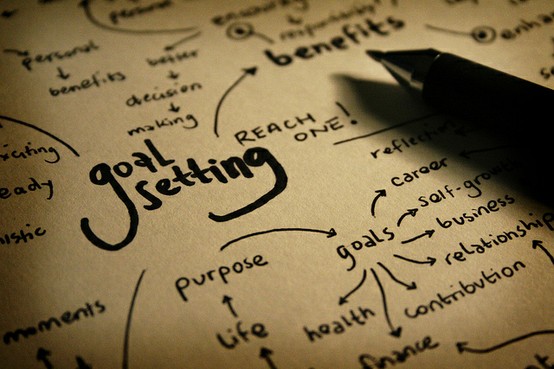
I’ve noticed that goal setting has been taking a bit of a beating on the blogosphere as of late.  Still, I’m a big fan of intentional future planning with specific outcomes attached. 

I don’t know what it is about the process that excites me--especially though not only at the start of a new year-- but I suspect that reviewing the past and planning the future gives me a sense of fresh-start and possibility.  But I also get the Zen / Buddist concepts of Letting Go of Desire and Embracing Acceptance Of What IS!  And so, in our mad, treadmill world, I understand why there's a big push this year for freedom from the tyranny of goals.  But maybe it's possible to have both.  Personally, I like having envisioning my future desires, identifying concrete goals and holding it all with a sense of lightness, curiosity and acceptance. Both/And, baby! 

That said, if you do want to head full on towards no goals, Leo Babauta’s The Best Goal is No Goal offers some wise inspiration.


Joe and I have been doing a Yearly Review and Design process every December for the past 15 years.  Every year it’s a little different; Here are some of the 2014 elements:

Past Year Review

Reflection is such an important part of growth and I love to look back over my Yearly Reviews to see the patterns and to recognize parts of my journey.  Some of the questions we ask include:

What were the primary events?  
Where were we? (where did we live or what traveling did we do?)  
What were the landmark personal and work events?  
Who spent time in our home with us?  
Which of our relationships began, changed or ended?

And...what did we learn?  As a MetaLearning fanatic who loves and supports life-long learning, taking stock of the past year’s lessons gives self-direction some serious legs.  A couple of inspiring examples are Carson Khan’s 33 Takeaways of 2013 and Meredith Perry’s Jigsaw Falling Into Place.

Next Year Visioning

After the review, we look towards the coming year.  If it’s suits your style to keep it SUPER simple, consider Susan Washington’s suggestion of just one resolution such as asking yourself a daily question like:

“How could I have been more thoughtful today?” Let that be our New Year’s resolution even though it’s really 'simple'. Simple things repeated over and over are major. Because resolutions that aren’t maintained make us feel worse than small, lasting and meaningful change.”

I love that!  I’m absolutely a person who admires the wisdom of simplicity but for better and for worse (believe me!) can’t seem to keep from adding, adding and adding more to it.  So here is what my process includes.  

A Yearly Theme: One of the overarching steps I like to take is to create a theme for the year.  
This puts the primary emphasis on process while still allowing space for specific outcomes.  I haven’t completely decided on my theme for this year but I’ll probably choose between Emotional Resiliency, Joy or Completion.  

Focus and Intentions: These are concepts and values will ideally support or augment the Yearly Theme.  This year I’m looking at Focus, Completion, Ease, Love, Humor, Good-Enough and Random Acts of Kindness.  Some years I come up with a different one for each month.  

Identify Domain-specific goals:  We do this for ourselves individually, as a couple and for our family-- in each of the following domains: Relationship/Marriage, Home, Kid Education, Finances, Community, Work, Fun, Travel, Personal Development, Self-care, Family and Contribution.

Specific Outcomes:  These are my primary goals for the year and I feel that it’s useful to be specific while also holding the final outcome and the details of how it looks somewhat lightly.  This might seem counter-intuitive but I think there is power and beauty in this seeming contradiction.  

I generally come up with specific goals in each domain but this year I'm keeping my eye on the top three biggies, my primary goals which are:

1) Publish a book (probably “MetaLearning”)
2) Compete in a ballroom dance competition (probably Mambo or Rumba)
3) Launch a new product (probably “Rock Your Talk” video class)

Processes:  One of the primary reasons some might reject the concept of Resolutions is that they are so heavily associated with Dec 31st and the implication is that you only make ‘em once a year. While as I said, I especially love the fresh slate of the new year, planning this stuff works best if you have systems and processes in place throughout the year.  James Clear outlines his approach in Forget Setting Goals. Focus on This Instead.

Some of the ongoing processes we use through the year are:

Family Goals: Every day we hold a family meeting in which we each identify a goal for the day which and then we set out to achieve it by 9pm the same night.   More details on the process are outlined in this article I wrote for Techmamas.

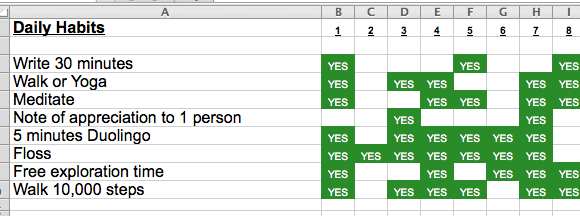
Daily Habits:  Cultivating what you do on a daily basis is a perfect example of systemizing for success.  It’s not about being perfect but rather about paying attention to the small steps that add up.  I use a spreadsheet to outline and track habits I’m working to cultivate but you can also use an apps like LIFT.


Monthly Focus: At the beginning of the year I make a plan for the progression of the year with a general focus for each month.  At this time I also review the goals I've identified and revise them if needed.

Quarterly Review: Each quarter Joe and I go back to our year planning document and review our progress in each domain area.  We check to see if we made progress or not and revise each area as appropriate.  

I compiled this information while going through my 2014 process and put it all together so that others could use whatever parts of it appeal to them.  If the New Year has already begun, don't worry, it still works.  That's the beauty of throwing out New Years Eve resolutions; Life planning, review and creation can be a part of daily life throughout the year!  


Thursday, December 5

Program Ideas for 14-17 year old self-directed learners?

Earlier this year, I wrote a post called My Current High School Independent Learning Crisis because that's what happens occasionally when loving, highly-involved parents have kids .  We're even more susceptible when we've accepted 100% responsibility for not just the basic necessity offerings, but also the responsibility for our kids' entire set of life and educational needs.  We are simply going to freak out every once in a while! Or every few months!  That was April; this is November.

Seriously, I'm kind of joking and kind of not.  The teen/high school years are a time of so much change not only in said kid's body and mind but also in terms of ME and my relationship with him.  I am learning how to parent all over; navigating the treacherous seas of guidance, navigation and letting go (while wanting both to do so AND to hold on for dear life).  I'm never really sure how much is too much or too little of each at any given time.  It's an ongoing frenzied, emotional dance of sorts.

SO, today I woke up realizing that:

1) As far as we've gone from the norm of education, we could afford to amp it up a notch further.  It might be time to get rid of the remaining threads of school-at-home and step one step further outside of the box.

2) Metaphorically, he's about where I was in my second year of University.  I realized then that I was taking content based classes but didn't know what I wanted to say once I had the skills I was being taught.  That's when I left and probably why I never went back.  And that's why I'm preparing myself to "toss" him out into the right real world situation (if I can find the right one).  Toss, you say?  Isn't it his job to rebel/leave; isn't that the way he will define himself.  Yes, and "at some point".  Right now, I'm a scaffolder.  I see it as my job to understand (with his help wherever possible) what he needs and help him get there.  I haven't yet pushed him in the proverbial pool to learn to swim but if I though it was the right thing, I might.

3) I care more about him caring about something than I do about the content in his knowledge base or even (and this might be new for me) his skill-set.  The reality is that once he knows why he wants to write, do math, explore science, then it will be easy for him to apply.  The missing link at almost 15 is self-awareness, self-advocacy and love/passion.

SO, given that he's far younger than I was at this stage of development...and I because I do still have the responsibility of scaffolding support, I'm looking for possible opportunities to expose him to the following:

1) communities of young people who are coming together to change the world in some positive way (even if that means starting with themselves).  The bottom line here is intentionality.
2) programs which support that change and last between 1 and 6 months (ie. not a full-time-give-us-your-kid-til-college kind of program)
3) leaders and leadership skills training for 14-17 year olds (ish)

Here are some of the possibilities that come to mind off the top of my head.  Do you have personal experience with any of these or have other suggestions?

Outward Bound  is more than just an outdoor camp. It is more than a wilderness adventure. Outward Bound has been changing lives through challenge and discovery for more than 50 years by using the wilderness as a classroom to provide unparalleled opportunities for discovery, personal growth, self-reliance, teamwork and compassion.  (NOTE: OB has been around for ages. I have no personal or anecdotal insight.  Expensive?)

National Teen Leadership Program is committed to create positive environments that empower, inspire and educate all teens to discover and maximize their unique leadership potential and embrace the diversity and equal value of everyone.  The focus during the 3 day summer program (in Sacramento or Southern California) is on the positive and on channeling the energy and enthusiasm already inherent in our youth to help them acquire focus and a vision for their future. The program challenges and empowers today’s youth by providing them with the skills and motivation necessary to positively impact their own lives and the lives of those in their communities.

Anake Outdoor School features 9 months of in-depth training in nature awareness and wilderness survival skills.  Participants develop a deep and intimate relationship with the natural world grounded in a powerful, community-oriented philosophy of learning. Your year is informed by the legacy of indigenous cultures from around the world. Each experience is crafted around a cutting-edge understanding of our natural heritage as human beings.


Unschool Adventures with Blake Boles offers a month long writing retreat.  (NOTE: I have a young friend who just returned from this years retreat.  She said it was life-changing in terms of the friends she made.)

The Woolman Semester School (Nevada City, CA) is a progressive academic school for young people who want to make a difference in the world.  Students in their junior, senior, or gap year come for a "semester away" to take charge of their education and study the issues that matter most to them.  Woolman students earn transferable high school credits while taking an active role in their learning experience through community work, organic gardening and cooking, permaculture, art, wilderness exploration, service work, and by doing advocacy and activism work with real issues of peace, justice and sustainability in the world.

Conserve School (Land O' Lakes, Wisconsin) inspires young people, primarily high school juniors, to environmental stewardship through academics and engagement with the forests, lakes, and wildlife of Lowenwood.  Each Conserve School semester immerses students in environmental history, nature literature, and the science of conservation. Innovative hands-on courses capture students’ imaginations while making the most of Conserve School’s 1200-acre wilderness campus. The school’s strikingly beautiful Northwoods location sets the stage for an exceptional educational experience; at Conserve School, forests, lakes, and wildlife become students’ inspiration, their course materials, and their laboratory. At the same time, Conserve School’s program advances students’ skills in standard high school subjects.

Sea Education Association is an internationally recognized leader in undergraduate ocean education which also offers Seascape a 3-week summer high school level oceanography program. For 40 years and more than one million nautical miles, we have educated students about the world’s oceans through our fully accredited study abroad program, SEA Semester. SEA is based on Cape Cod in the oceanographic research community of Woods Hole, Massachusetts. (NOTE: The High School program sails from SF on the same tall ship a friend, Christa C. sailed in the Gyre, with shore studies on Catalina Island.)

The Experiment in International Living has been offering extraordinary immersive cross-cultural summer exchanges, fun and thought-provoking adventures, and experiential learning programs since 1932. Today, The Experiment offers three-, four-, and five-week summer programs for high school students in more than 20 countries around the world.


Summer Programs

SPARC is a how-to-be-awesome camp for extremely bright high school students, focussing on math, psychology, programming, statistics, and general personal effectiveness. CFAR (the parent organization, http://rationality.org/) normally charges $4k for 4 days of training, but SPARC is free for high-school-aged students, so it's a great opportunity for any interested young people. SPARC has typically only admitted folks scoring in the top 50 in the US on mathematics competitions, but is now open to admitting a more diverse group, provided the applicants are sufficiently awesome. 

Thanks for your ideas!  -Lisa

Addendum:

http://projectworldschool.com/


----


PS.  Please note that there are so many amazing opportunities for self-directed learners 18+ but that's another story.  Look for an upcoming piece highlighting:

Trailblazers
Watson University
Uncollege
The Millenial Train Project
The Thiel Fellowship


Thursday, May 9

My current High School Independent Learning Crisis

Taking responsibility for my kids' education has been an incredibly exciting and empowering journey.  But, sometimes it's also terrifying.  Doubt seeps in every year or so when I find myself worrying about what I might be missing, and wondering if the kids are getting what they need and developing the life skills --the Meta-skills--I feel sure are critical for the future.

My husband and I, and now our kids, too, do Freedom really well!  We create many super compelling experiences in our world, we engage in many different thought communities, we take a travel-schooling trip for 2 or 3 months every year (we're currently in France, though not doing much blogging this time around), and we live engaged lives with lots of people around us.  We host couchsurfers and Airbnb guests from all over the world, we've had five au pairs who remain a part of our extended family and we collectively contribute to many different communities in our sweet intellectual bubble that is the bay area.  We have a shared principle of individualization, personal choice, collectivity and community.   

This last panic-round, I became intensely worried about my ability to provide structure, order, time management and discipline.  Now this is especially problematic and discombulating because I spend so much of my time advocating for the freedom available to learners in the coming years and knowing that we all need to learn how to be a learner and how to make projects happen.  I call the first meta-Learning, I call the second output Skills; De Bono calls it Operacy. I believe in self-directed learning and freedom but right now, at least, I was feeling sure my kids don't have any particular goals or desires as far as I can tell.  

When this happens I reach out to the 350+plus families who live nearby and who share in the journey with me.  These are other families who've taken the leap, left or avoided school altogether, and who are customizing learning for their kids.  I especially reach out to those who have older kids and who have gone before me.  There is certainly great usefulness is the encouragement which comes from other sympathetic people but each stage has it's own challenges.  So, while I feel able to advise and consult with those who are beginning the journey of learning outside of institutions, to support those with younger kids, the teenage and "high school"-ish years have thrown me for a bit of a loop.

Some of this could be Life With A Teenager and the development challenges that stage imposes to parents. Now mine is no slouch.  Capable and a super fast learner, he reads voraciously and quickly, he plays the piano, sings, performs in musical theater shows two or three times per year, practices fencing, takes college-level Coursera courses in classes like Model Thinking ("fun", "strong on life skills"), Game Theory ("deep", "packs a lot of content and nuance into a seemingly singular topic") and Machine Learning ("practical", "profound concepts patiently explained") and Functional Programming ("fast-paced", "high work load", "focused on programming skills").  He's also becoming quite conversational in French, is pretty good at math though he doesn't love it and, when he can get over his sometimes-extreme writer's block, is a very capable and humorous writer.  Recreation is memorizing the library of XKCD comics, watching Dr Who and reading some more (mostly science fiction).

During these homeschooling crisis moments, I usually think about sending him to school and in fact, that may be the answer.  Part of independent learning is the opportunity to change things up as needed.  What is right at one time may be wrong at another.  It could be that time in life when another caring adult can be a more effective mentor than can his parents.  Maybe boarding school is the answer so as to take the parental influence completely out of the picture.  Or maybe he should get a job.  Maybe I should ship him to Toronto, my hometown, so he can attend a great little private school with some friends.

Ok, so, now that I've had my two-day panic and have reached out to my friends and network and spent a lot of time online researching boarding schools, progressive schools, democratic schools, leadership organizations and wilderness programs, I feel there are many possible solutions.  

--

Possible Available Options for Continuing Customized Learning

Now that I've mostly come back to my senses, I realize that what we'll do for high school is what we've done for the past eight years.  We will collectively design a learning plan that considers learning needs (the charter's requirements and ours both, as well as what's needed to avoid closing doors), interests, learning style and ZPD (or Zone of Proximal Development ie. that which is appropriately leveled, not too easy or too hard but just right, and therefore, engaging).  

Concurrent College
Many of the young, bright independent learners begin taking college classes anywhere between 12 and 16 years old.  Early entrance (or concurrent enrollment) is a way for students to enroll in postsecondary education before completing high school.  It was suggested by a friend that this can be a great way to start building stronger organization skills and learning the higher ed ropes.  Here's a checklist for Foothill College.  There's a ton of great information for this path here.  

Leadership Programs
National Teen Leadership Program is committed to create positive environments that empower, inspire and educate all teens to discover and maximize their unique leadership potential and embrace the diversity and equal value of everyone.  The focus during the 3 day summer program (in Sacramento or Southern California) is on the positive and on channeling the energy and enthusiasm already inherent in our youth to help them acquire focus and a vision for their future. The program challenges and empowers today’s youth by providing them with the skills and motivation necessary to positively impact their own lives and the lives of those in their communities.

Landmark Forum For Teens is challenging and exciting. It's an interactive experience, more like coaching than teaching. A Landmark Forum leader leads teens through a series of discussions geared toward dealing with issues that are important to them.  The Landmark Forum for Teens is for 13- to 17-year-olds who participate with the permission of their parents.

Jim Wiltens is a Redwood City resident who offers a variety of leadership, writing and science programs which are interactive, practical and fun.   

Nature Studies
The Riekes Center exists for the enhancement of the individual student. Mission is to provide each student with the best possible opportunity to define and accomplish individual goals, build character and learn transferable life skills through Creative Arts, Athletic Fitness and Nature Awareness, in an environment of non-judgment and mutual respect.
Anake Outdoor School features 9 months of in-depth training in nature awareness and wilderness survival skills.  Participants develop a deep and intimate relationship with the natural world grounded in a powerful, community-oriented philosophy of learning. Your year is informed by the legacy of indigenous cultures from around the world. Each experience is crafted around a cutting-edge understanding of our natural heritage as human beings.
Unschool Adventures with Blake Boles offers a month long writing retreat 

Life Skills
Speech and Debate options:

Communication Academy also offers public speaking and debate.

Bay Area Speech and Debate Academy offers programs designed for individuals of all levels and experiences in Public Forum, LincolnDouglas, Congressional Debate, and Extemporaneous Speech. 

Bay Area Public Speaking conducts basic and advanced courses, certification in Public Speaking and Debates. The classes are held all over the Bay area for children in the age group of 8 - 14yrs.The goal of these classes is to improve confidence, public speaking, and communication skills of the kids keeping in mind kids get motivated if the class is FUN!

Consulting

Wes Beach
Barbara Bettle


Stay tuned...

A La Carte Classes and Learning
School for Independent Learners (Mountainview, CA) is a new kind of high school, an open invitation to learn your way. We create custom programs for students in grades 6 to 12 who seek intellectual freedom, flexible scheduling, and a chance to learn without the threat of failure. 

A La Carte Classes and Learning (Online)

My Social Justice Course is a UC-approved, college preparatory class explores both the ideas of social justice and the impact of social entrepreneurship.  Social justice is an enriching topic of study. But we think it also makes for great inspiration. When people start to organize and take action towards social justice, it’s called social entrepreneurship. 
The Big History Project takes students on a 13.7 billion year journey, from the Big Bang to modern day and ultimately the future. It is designed as a yearlong, interdisciplinary course targeting 9th and 10th graders. It weaves evidence and insights from many scientific and historical disciplines into a single, accessible historical narrative.  Big history links different areas of knowledge into one unified story. It’s a framework for learning about anything and everything. This unified story provides students with a deeper awareness of our past, hopefully better preparing them to help shape the future of our fragile planet.  Samples.

What we might not do this year but could do in the future


Just so the time was not altogether wasted I'm compiled the possibilities here for the next time, or for others who want a little more structure but not the traditional learning path.

Other Possibilities for independent learners
USA
The Woolman Semester School (Nevada City, CA) is a progressive academic school for young people who want to make a difference in the world.  Students in their junior, senior, or gap year come for a "semester away" to take charge of their education and study the issues that matter most to them.  Woolman students earn transferable high school credits while taking an active role in their learning experience through community work, organic gardening and cooking, permaculture, art, wilderness exploration, service work, and by doing advocacy and activism work with real issues of peace, justice and sustainability in the world.

Conserve School (Land O' Lakes, Wisconsin) inspires young people, primarily high school juniors, to environmental stewardship through academics and engagement with the forests, lakes, and wildlife of Lowenwood.  Each Conserve School semester immerses students in environmental history, nature literature, and the science of conservation. Innovative hands-on courses capture students’ imaginations while making the most of Conserve School’s 1200-acre wilderness campus. The school’s strikingly beautiful Northwoods location sets the stage for an exceptional educational experience; at Conserve School, forests, lakes, and wildlife become students’ inspiration, their course materials, and their laboratory. At the same time, Conserve School’s program advances students’ skills in standard high school subjects.

Sea Education Association is an internationally recognized leader in undergraduate ocean education which also offers high school level summer programs, a 3-week oceanography program. For 40 years and more than one million nautical miles, we have educated students about the world’s oceans through our fully accredited study abroad program, SEA Semester. SEA is based on Cape Cod in the oceanographic research community of Woods Hole, Massachusetts. The High School program sails from SF on the same tall ship a friend, Christa C. sailed in the Gyre, with shore studies on Catalina Island. 
International
The Ecole d’Humanité is a progressive, international boarding school situated in the heart of the Swiss Alps. 150 Students and 50 teachers from some 25 different countries live together in a dynamic community that fosters the discovery and development of individual talents – academic, artistic, practical, athletic, and social – in an atmosphere that encourages self-determination, innovation, and tolerance.  Whether modeling projectile motion in a calculus based physics class or performing in the annual Shakespeare play, summiting a 4000 meter peak or hammering red hot iron on a giant anvil, Ecole students actively pursue their passions in a setting that is both challenging and liberating.
Distance High School Programs
Global Village School (Ojai, CA) offers a progressive, accredited, customizable K-12 homeschooling program via online and text-based curriculum, complete with individualized teacher services. Our high school homeschool diploma courses integrate peace, justice, and diversity studies with the core subjects. We are an international distance learning school; we welcome homeschooling students from around the globe.  Creative flexible approach, our emphasis on peace, justice, diversity and sustainability.  Here's a sample homeschool high school plan.
Other semester and service learning programs
Non-local Alternative or Progressive High Schools
Diablo Valley School (Concord) - Democratic/Sudbury School

Wilderness Awareness School is a national not-for-profit environmental education organization established in 1983 and based in Duvall, Washington. We are dedicated to caring for the earth and our children by fostering understanding and appreciation of nature, community and self.
High Mowing School is the first Waldorf high school to be founded in North America and the only one to offer a boarding program.  Here on Abbot Hill there is a rich educational and social community that, over the last nearly seven decades, has developed, changed and adjusted to meet the needs of the students, offering teenagers a unique combination of Waldorf education and community living. 
At Catalyst High School, the student is in control of key decisions such as building a logical and balanced schedule and for calling regarding an absence. Being in control is empowering, and genuinely builds self esteem.  Our team helps students develop positive attitudes and productive actions by cultivating constructive use of time, commitment to learning, positive values, social competencies, and a positive identity. Catalyst High School is built on solid research that shows that teens who engage in these types of activities become happier, healthier, and more resistant, and become more successful adults. At Catalyst High School, the student assumes responsibility of his or her educational experience. This includes attendance, what to study, and when to take a class. The school schedule is not a 7:30-3:00 seven-period day, rather it is more like a college schedule, with free time built in.

Casco Bay High School for Expeditionary Learning (CBHS) is a small and rigorous public high school that reflects the increasing diversity of Portland, Maine.  Founded in 2005, CBHS is a school of choice for about 275 students.  At Casco Bay, we challenge and support our students to become college-ready through our 3Rs: Rigor, Relevance, and Relationships.  The academic program includes Learning Expeditions, college prep, Character Building and an Ethic of Service, Portfolios, Adventure and Fitness, and Fieldwork.

The Graham School has a particular mission to urban students in Central Ohio preparing them for lifelong learning and informed citizenship through real-world experiences and rigorous academics. Fostering ownership and responsibility for their education prepares our students to be successful in college, the workplace, and other endeavors they undertake upon leaving Graham.

Summer Travel Programs and Camps:
Abbey Road’s study abroad summer programs continue to deliver excellence. Our mission is to provide quality academic summer programs that facilitate cross-cultural understanding, personal growth and academic enrichment. Abbey Road was created through a collaboration of the best young professionals and educators from top schools and esteemed institutions. Our curriculum developers and staff come from places such as Harvard, Yale, Stanford, Duke, Cambridge, La Sorbonne, the United Nations, the World Bank, the European Parliament and the State Department  …..  just to name a few.

The Experiment in International Living has been offering extraordinary immersive cross-cultural summer exchanges, fun and thought-provoking adventures, and experiential learning programs since 1932. Today, The Experiment offers three-, four-, and five-week summer programs for high school students in more than 20 countries around the world.

Not Back to School Summer Camp

-Lisa

Acknowledgements:

Thank you so much to my friends and community members who contributed support and many of the specific suggestions on this list.  I'm grateful to Jennifer D, Shelly C, Felicia G, Elaine L, Krista C, Caryn C, Debbie S, Jon Z, Sharon B, Candace P, Suki W, Kirsten N, Marlow S, Anna C, Amy T, Min L, Andrew, Kris K and Kevin K. as well as those I may have missed.