Showing posts with label Parenting. Show all posts
Showing posts with label Parenting. Show all posts
Tuesday, March 18
Talk to Me First - Deborah Ruffman on Sex and Teens
This summary is not available. Please
click here to view the post.


Thursday, January 30
Dan Spiegel author of Brainstorm- Notes from his talk at Spirit Rock
Optimizing the Essence of Adolescence
I caught Dr Siegal speaking at the Spirit Rock Meditation Center this weekend and while I was only able to stay for the first half of the talk I took away some inspiring ideas as related to Discovering the Hidden Power & Purpose of the Adolescent Mind.
While a child’s brain operates like a sponge soaking up the world around, the adolescent brain has at it’s central pursuit a process Siegel compares to remodeling a house. And like most remodeling projects, this one can be kind of messy. “Pruning” and “Myelination” are two of the central activities going on as the adolescent brain rewires it's in “use-it-or-lose-it” brain changing process. Pruning refers to the loss of synaptic connections and Myelination is the strengthening of others allowing nerve cells are able to more quickly transmit information allowing for more complex brain processes. The teen brain goes through this intense remodeling and rewiring for the necessary purpose of preparing to leave home.
During the tween and teen years, myelination occurs in the frontal lobe of the brain and impacts cognitive development. Improved "executive functioning," planning, reasoning and decision-making skills result.1
If you want to learn more about the myelination process as it relates to specialization and abilities, The Talent Code website has some nice visual models of the process as well as ideas for supporting the myelination process.
It's not all upside. It's true that...
Risk-taking and Novelty Seeking are Responses of the Developing Teen Brain
Part of the developing teen brain is the orientation towards seeking novelty and risk, which are a vital part of the process of becoming adults. Teens have to go through this stage in order to learn how to take risks and to navigate the world outside of the safety of home. The risk of the teen years according to Siegel has less to do with sex hormones as the cultural myth suggests and more to do with changes in the structure and functioning of our brain’s dopamine reward system. Teens tend to be intellectually aware of risks but they put more weight on the exciting potential outcomes. And because baseline dopamine levels are lower in adolescence while dopamine release amounts are higher adolescents seek experiences that secrete dopamine.2,4
Three dangers the teen brain is more susceptible to are impulsiveness, vulnerability to addiction and hyperrationality. If we are aware of the inclinations we can help protect adolescents and provide appropriate opportunities for risk-taking and novelty seeking that are have very positive applications. Impulsiveness mitigated by self-awareness and reflection, or “cognitive control”.
Addiction
Because teens are 1) impacted by peer pressure 2) more likely to experiment with new experiences AND 3) more prone to respond with a strong dopamine release which can become part of an addictive cycle the adolescent stage of life 3,4
The reward systems and other areas of the subcortex such as those parts that process emotions, reach maturity relatively early (when people are in their early teens)6
Hyperrationality: Thinking in literal concrete terms. examining just the fact of a situation and missing the big picture. Creates the positive bias that is dominant during the teen years.
My husband suggests that the evolutionary motivation for rewiring with a strong response for dopamine rewards is related to increasing motivation to propogate.
Hyperrationalism
Another one is what I call hyper-rational thinking, and this is where, it’s not the reward circuit, but what are called the appraisal circuits that change. And these appraisal circuits, basically, are weighing the pros and cons of the decision. So this would be relevant for drug use in that you may have people who are making choices about things where it isn’t in their best interest. The appraisal system, the upside is that it says, these are the exciting things going on, and this is why I want to do this, this will be really fun. It over-emphasizes the positive aspects of a choice, and it de-emphasizes the negative aspects of a choice. The overall result is you kind of rationalize it, and that’s why I call it hyper-rational.4
Pruning process reveals vulnerability plus stress increases pruning plus lack of sleep. Give practices to grow integrated fibres to strengthen brain and protect from the danger of risks like mental breaks, depression, schizophrenia.
Preventable accidents
-appraisal system weighs pros and cons and in teen brain this evaluation is skewed. Why? To create rites of passage which is needed for the larger process of preparing them to get out of the house.
-pushing against the adult world...creating a whole new world.
-(childhood is sponging up the world of adults)
-major innovations in art science music come from adolescents. Let's rethink this and capitalize on the courage and creativity of youth. Instead tell them the truth. Ue companies are motivated to get you addicted for their own benefit
-help adolescent to create an internal compass (my gut says don't do it)...empower teens with resource of deep internal compass
What Can Be Done
internal education, the kind of internal sense of yourself, the likelier you are to be able to regulate, for example, your emotions and clarify your thinking.
Essence of changes of remodeling
E Emotional spark (irritable and life has more vitality..optimize spark)
SE Social engagement (vulnerable and gets you ready to leave home with alternative influences)
Novelty (dangerous, can't just do same old thing
CE Creative Exploration (new, all innovation comes from adolescence but can feel disoriented and identity confusion)
Top 4 things to keep brain young are the same four things
Cultural change means accepting this for adolescents and ourselves!
Approach world challenges in a way that engages those four things and creativity snd courage of adolescents tge opportunity to find solutions to the biggest problems is there. How can you participate in taking this possibility and changing the cultural conversation to make this change.
The Essential Take-Away
I would what I took away from the first half of the talk as follows:
Our cultural tells an inaccurate story about teens which has us, and our teens, think of the time period of adolescence (roughly defined as 12-24) as something to get through; a period of ranging hormones and impulsiveness. If we change our perspective and understand that the brain during those years is in a complex process of remodeling for the explicit purpose of leaving home and becoming autonomous we could better support the process; mitigate the risks that also come with the territory; and take advantage of the courage and creativity that are the gifts of that stage of life. Further, if we as adults use some of the same techniques for developing and enhancing the implicit benefits in our own brains, we’d would have that much more to contribute and be more in line with and synergistic with our teens ability to challenge and innovate and solve big problems. Adolescence is not a stage to get over, it is stage to cultivate well in order to enhance the vitally important developmental changes which are crucial for the individual and our collective.
Tuesday, December 31
A Yearly Vision Process
I’ve noticed that goal setting has been taking a bit of a beating on the blogosphere as of late. Still, I’m a big fan of intentional future planning with specific outcomes attached.
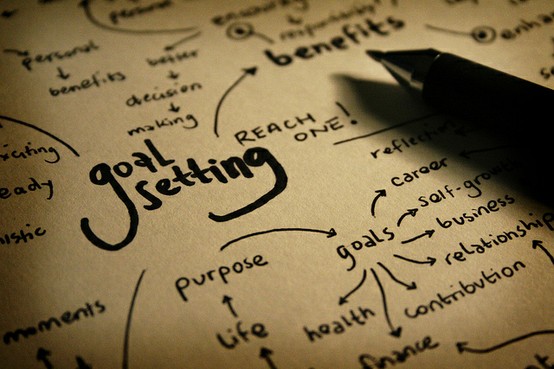 Joe and I have been doing a Yearly Review and Design process every December for the past 15 years. Every year it’s a little different; Here are some of the 2014 elements:
Past Year Review
Which of our relationships began, changed or ended?
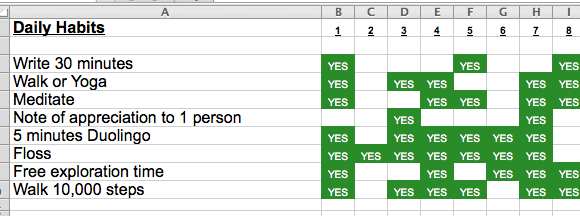
Daily Habits: Cultivating what you do on a daily basis is a perfect example of systemizing for success. It’s not about being perfect but rather about paying attention to the small steps that add up. I use a spreadsheet to outline and track habits I’m working to cultivate but you can also use an apps like LIFT.
Monthly Focus: At the beginning of the year I make a plan for the progression of the year with a general focus for each month. At this time I also review the goals I've identified and revise them if needed.
I don’t know what it is about the process that excites me--especially though not only at the start of a new year-- but I suspect that reviewing the past and planning the future gives me a sense of fresh-start and possibility. But I also get the Zen / Buddist concepts of Letting Go of Desire and Embracing Acceptance Of What IS! And so, in our mad, treadmill world, I understand why there's a big push this year for freedom from the tyranny of goals. But maybe it's possible to have both. Personally, I like having envisioning my future desires, identifying concrete goals and holding it all with a sense of lightness, curiosity and acceptance. Both/And, baby!
That said, if you do want to head full on towards no goals, Leo Babauta’s The Best Goal is No Goal offers some wise inspiration.
Past Year Review
Reflection
is such an important part of growth and I love to look back over my
Yearly Reviews to see the patterns and to recognize parts of my
journey. Some of the questions we ask include:
What were the primary events?
Where were we? (where did we live or what traveling did we do?)
What were the primary events?
Where were we? (where did we live or what traveling did we do?)
What were the landmark personal and work events?
Who spent time in our home with us?
And...what did we learn? As a MetaLearning fanatic who loves and supports life-long learning, taking stock of the past year’s lessons gives self-direction some serious legs. A couple of inspiring examples are Carson Khan’s 33 Takeaways of 2013 and Meredith Perry’s Jigsaw Falling Into Place.
Next Year Visioning
After the review, we look towards the coming year. If it’s suits your style to keep it SUPER simple, consider Susan Washington’s suggestion of just one resolution such as asking yourself a daily question like:
Identify Domain-specific goals: We do this for ourselves individually, as a couple and for our family-- in each of the following domains: Relationship/Marriage, Home, Kid Education, Finances, Community, Work, Fun, Travel, Personal Development, Self-care, Family and Contribution.
“How
could I have been more thoughtful today?” Let that be our New Year’s resolution even though it’s
really 'simple'. Simple things repeated over and over are major. Because
resolutions that aren’t maintained make us feel worse than small,
lasting and meaningful change.”
I
love that! I’m absolutely a person who admires the wisdom of
simplicity but for better and for worse (believe me!) can’t seem to keep
from adding, adding and adding more to it. So here is what my process
includes.
A Yearly Theme: One of the overarching steps I like to take is to create a theme for the year.
This
puts the primary emphasis on process while still allowing space for
specific outcomes. I haven’t completely decided on my theme for this
year but I’ll probably choose between Emotional Resiliency, Joy or Completion.
Focus and Intentions:
These are concepts and values will ideally support or augment the
Yearly Theme. This year I’m looking at Focus, Completion, Ease, Love,
Humor, Good-Enough and Random Acts of Kindness. Some years I come up
with a different one for each month.
Identify Domain-specific goals: We do this for ourselves individually, as a couple and for our family-- in each of the following domains: Relationship/Marriage, Home, Kid Education, Finances, Community, Work, Fun, Travel, Personal Development, Self-care, Family and Contribution.
Specific Outcomes: These
are my primary goals for the year and I feel that it’s useful to be
specific while also holding the final outcome and the details of how it
looks somewhat lightly. This might seem counter-intuitive but I think there is power and beauty in this seeming contradiction.
I generally come up with specific goals in each domain but this year I'm keeping my eye on the top three biggies, my primary goals which are:
I generally come up with specific goals in each domain but this year I'm keeping my eye on the top three biggies, my primary goals which are:
1) Publish a book (probably “MetaLearning”)
2) Compete in a ballroom dance competition (probably Mambo or Rumba)
3) Launch a new product (probably “Rock Your Talk” video class)
Processes:
One of the primary reasons some might reject the concept of
Resolutions is that they are so heavily associated with Dec 31st and the
implication is that you only make ‘em once a year. While as I said, I
especially love the fresh slate of the new year, planning this stuff
works best if you have systems and processes in place throughout the
year. James Clear outlines his approach in Forget Setting Goals. Focus on This Instead.
Some of the ongoing processes we use through the year are:
Family Goals: Every day we hold a family meeting in which we each identify a goal for the day which and then we set out to achieve it by 9pm the same night. More details on the process are outlined in this article I wrote for Techmamas.
Family Goals: Every day we hold a family meeting in which we each identify a goal for the day which and then we set out to achieve it by 9pm the same night. More details on the process are outlined in this article I wrote for Techmamas.
Daily Habits: Cultivating what you do on a daily basis is a perfect example of systemizing for success. It’s not about being perfect but rather about paying attention to the small steps that add up. I use a spreadsheet to outline and track habits I’m working to cultivate but you can also use an apps like LIFT.
Monthly Focus: At the beginning of the year I make a plan for the progression of the year with a general focus for each month. At this time I also review the goals I've identified and revise them if needed.
Quarterly Review:
Each quarter Joe and I go back to our year planning document and review
our progress in each domain area. We check to see if we made progress
or not and revise each area as appropriate.
I compiled this information while going through my 2014 process and put it all together so that others could use whatever parts of it appeal to them. If the New Year has already begun, don't worry, it still works. That's the beauty of throwing out New Years Eve resolutions; Life planning, review and creation can be a part of daily life throughout the year!
Thursday, December 5
Program Ideas for 14-17 year old self-directed learners?
Earlier this year, I wrote a post called My Current High School Independent Learning Crisis because that's what happens occasionally when loving, highly-involved parents have kids . We're even more susceptible when we've accepted 100% responsibility for not just the basic necessity offerings, but also the responsibility for our kids' entire set of life and educational needs. We are simply going to freak out every once in a while! Or every few months! That was April; this is November.
Seriously, I'm kind of joking and kind of not. The teen/high school years are a time of so much change not only in said kid's body and mind but also in terms of ME and my relationship with him. I am learning how to parent all over; navigating the treacherous seas of guidance, navigation and letting go (while wanting both to do so AND to hold on for dear life). I'm never really sure how much is too much or too little of each at any given time. It's an ongoing frenzied, emotional dance of sorts.
SO, today I woke up realizing that:
 1) As far as we've gone from the norm of education, we could afford to amp it up a notch further. It might be time to get rid of the remaining threads of school-at-home and step one step further outside of the box.
2) Metaphorically, he's about where I was in my second year of University. I realized then that I was taking content based classes but didn't know what I wanted to say once I had the skills I was being taught. That's when I left and probably why I never went back. And that's why I'm preparing myself to "toss" him out into the right real world situation (if I can find the right one). Toss, you say? Isn't it his job to rebel/leave; isn't that the way he will define himself. Yes, and "at some point". Right now, I'm a scaffolder. I see it as my job to understand (with his help wherever possible) what he needs and help him get there. I haven't yet pushed him in the proverbial pool to learn to swim but if I though it was the right thing, I might.
 3) I care more about him caring about something than I do about the content in his knowledge base or even (and this might be new for me) his skill-set. The reality is that once he knows why he wants to write, do math, explore science, then it will be easy for him to apply. The missing link at almost 15 is self-awareness, self-advocacy and love/passion.
SO, given that he's far younger than I was at this stage of development...and I because I do still have the responsibility of scaffolding support, I'm looking for possible opportunities to expose him to the following:
1) communities of young people who are coming together to change the world in some positive way (even if that means starting with themselves). The bottom line here is intentionality.
2) programs which support that change and last between 1 and 6 months (ie. not a full-time-give-us-your-kid-til-college kind of program)
3) leaders and leadership skills training for 14-17 year olds (ish)
Here are some of the possibilities that come to mind off the top of my head. Do you have personal experience with any of these or have other suggestions?
Outward Bound is more than just an outdoor camp. It is more than a wilderness adventure. Outward Bound has been changing lives through challenge and discovery for more than 50 years by using the wilderness as a classroom to provide unparalleled opportunities for discovery, personal growth, self-reliance, teamwork and compassion. (NOTE: OB has been around for ages. I have no personal or anecdotal insight. Expensive?)
National Teen Leadership Program is committed to create positive environments that empower, inspire and educate all teens to discover and maximize their unique leadership potential and embrace the diversity and equal value of everyone. The focus during the 3 day summer program (in Sacramento or Southern California) is on the positive and on channeling the energy and enthusiasm already inherent in our youth to help them acquire focus and a vision for their future. The program challenges and empowers today’s youth by providing them with the skills and motivation necessary to positively impact their own lives and the lives of those in their communities.
Addendum:
http://projectworldschool.com/
Seriously, I'm kind of joking and kind of not. The teen/high school years are a time of so much change not only in said kid's body and mind but also in terms of ME and my relationship with him. I am learning how to parent all over; navigating the treacherous seas of guidance, navigation and letting go (while wanting both to do so AND to hold on for dear life). I'm never really sure how much is too much or too little of each at any given time. It's an ongoing frenzied, emotional dance of sorts.
SO, today I woke up realizing that:
 1) As far as we've gone from the norm of education, we could afford to amp it up a notch further. It might be time to get rid of the remaining threads of school-at-home and step one step further outside of the box.
 2) Metaphorically, he's about where I was in my second year of University. I realized then that I was taking content based classes but didn't know what I wanted to say once I had the skills I was being taught. That's when I left and probably why I never went back. And that's why I'm preparing myself to "toss" him out into the right real world situation (if I can find the right one). Toss, you say? Isn't it his job to rebel/leave; isn't that the way he will define himself. Yes, and "at some point". Right now, I'm a scaffolder. I see it as my job to understand (with his help wherever possible) what he needs and help him get there. I haven't yet pushed him in the proverbial pool to learn to swim but if I though it was the right thing, I might.
 3) I care more about him caring about something than I do about the content in his knowledge base or even (and this might be new for me) his skill-set. The reality is that once he knows why he wants to write, do math, explore science, then it will be easy for him to apply. The missing link at almost 15 is self-awareness, self-advocacy and love/passion.
 SO, given that he's far younger than I was at this stage of development...and I because I do still have the responsibility of scaffolding support, I'm looking for possible opportunities to expose him to the following:
1) communities of young people who are coming together to change the world in some positive way (even if that means starting with themselves). The bottom line here is intentionality.
2) programs which support that change and last between 1 and 6 months (ie. not a full-time-give-us-your-kid-til-college kind of program)
3) leaders and leadership skills training for 14-17 year olds (ish)
Here are some of the possibilities that come to mind off the top of my head. Do you have personal experience with any of these or have other suggestions?
Outward Bound is more than just an outdoor camp. It is more than a wilderness adventure. Outward Bound has been changing lives through challenge and discovery for more than 50 years by using the wilderness as a classroom to provide unparalleled opportunities for discovery, personal growth, self-reliance, teamwork and compassion. (NOTE: OB has been around for ages. I have no personal or anecdotal insight. Expensive?)
National Teen Leadership Program is committed to create positive environments that empower, inspire and educate all teens to discover and maximize their unique leadership potential and embrace the diversity and equal value of everyone. The focus during the 3 day summer program (in Sacramento or Southern California) is on the positive and on channeling the energy and enthusiasm already inherent in our youth to help them acquire focus and a vision for their future. The program challenges and empowers today’s youth by providing them with the skills and motivation necessary to positively impact their own lives and the lives of those in their communities.
Anake Outdoor School features 9 months of in-depth training in nature awareness and wilderness survival skills. Participants develop a deep and intimate relationship with the natural world grounded in a powerful, community-oriented philosophy of learning. Your year is informed by the legacy of indigenous cultures from around the world. Each experience is crafted around a cutting-edge understanding of our natural heritage as human beings.
The Woolman Semester School (Nevada City, CA) is a progressive academic school for young people who want to make a difference in the world. Students in their junior, senior, or gap year come for a "semester away" to take charge of their education and study the issues that matter most to them. Woolman students earn transferable high school credits while taking an active role in their learning experience through community work, organic gardening and cooking, permaculture, art, wilderness exploration, service work, and by doing advocacy and activism work with real issues of peace, justice and sustainability in the world.
Sea Education Association is an internationally recognized leader in undergraduate ocean education which also offers Seascape a 3-week summer high school level oceanography program. For 40 years and more than one million nautical miles, we have educated students about the world’s oceans through our fully accredited study abroad program, SEA Semester. SEA is based on Cape Cod in the oceanographic research community of Woods Hole, Massachusetts. (NOTE: The High School program sails from SF on the same tall ship a friend, Christa C. sailed in the Gyre, with shore studies on Catalina Island.)
Unschool Adventures with Blake Boles offers a month long writing retreat. (NOTE: I have a young friend who just returned from this years retreat. She said it was life-changing in terms of the friends she made.)
The Woolman Semester School (Nevada City, CA) is a progressive academic school for young people who want to make a difference in the world. Students in their junior, senior, or gap year come for a "semester away" to take charge of their education and study the issues that matter most to them. Woolman students earn transferable high school credits while taking an active role in their learning experience through community work, organic gardening and cooking, permaculture, art, wilderness exploration, service work, and by doing advocacy and activism work with real issues of peace, justice and sustainability in the world.
Conserve School (Land O' Lakes, Wisconsin) inspires young people, primarily high school juniors, to environmental stewardship through academics and engagement with the forests, lakes, and wildlife of Lowenwood. Each Conserve School semester immerses students in environmental history, nature literature, and the science of conservation. Innovative hands-on courses capture students’ imaginations while making the most of Conserve School’s 1200-acre wilderness campus. The school’s strikingly beautiful Northwoods location sets the stage for an exceptional educational experience; at Conserve School, forests, lakes, and wildlife become students’ inspiration, their course materials, and their laboratory. At the same time, Conserve School’s program advances students’ skills in standard high school subjects. |
Sea Education Association is an internationally recognized leader in undergraduate ocean education which also offers Seascape a 3-week summer high school level oceanography program. For 40 years and more than one million nautical miles, we have educated students about the world’s oceans through our fully accredited study abroad program, SEA Semester. SEA is based on Cape Cod in the oceanographic research community of Woods Hole, Massachusetts. (NOTE: The High School program sails from SF on the same tall ship a friend, Christa C. sailed in the Gyre, with shore studies on Catalina Island.)
The Experiment in International Living has been offering extraordinary immersive cross-cultural summer exchanges, fun and thought-provoking adventures, and experiential learning programs since 1932. Today, The Experiment offers three-, four-, and five-week summer programs for high school students in more than 20 countries around the world.
Summer Programs
SPARC is a how-to-be-awesome camp for extremely bright high school students, focussing on math, psychology, programming, statistics, and general personal effectiveness. CFAR (the parent organization, http://rationality.org/) normally charges $4k for 4 days of training, but SPARC is free for high-school-aged students, so it's a great opportunity for any interested young people. SPARC has typically only admitted folks scoring in the top 50 in the US on mathematics competitions, but is now open to admitting a more diverse group, provided the applicants are sufficiently awesome.
Thanks for your ideas! -Lisa
http://projectworldschool.com/
----
PS. Please note that there are so many amazing opportunities for self-directed learners 18+ but that's another story. Look for an upcoming piece highlighting:
Trailblazers
Watson University
Uncollege
The Millenial Train Project
The Thiel Fellowship
Subscribe to:
Posts (Atom)